The Daily Baseload Brief
U.S. battery storage crosses 52 GW; DOE closes $489 million Puerto Rico grid loan; Latin America's solar build accelerates while storage lags. Power sector digest for 12 August 2026.
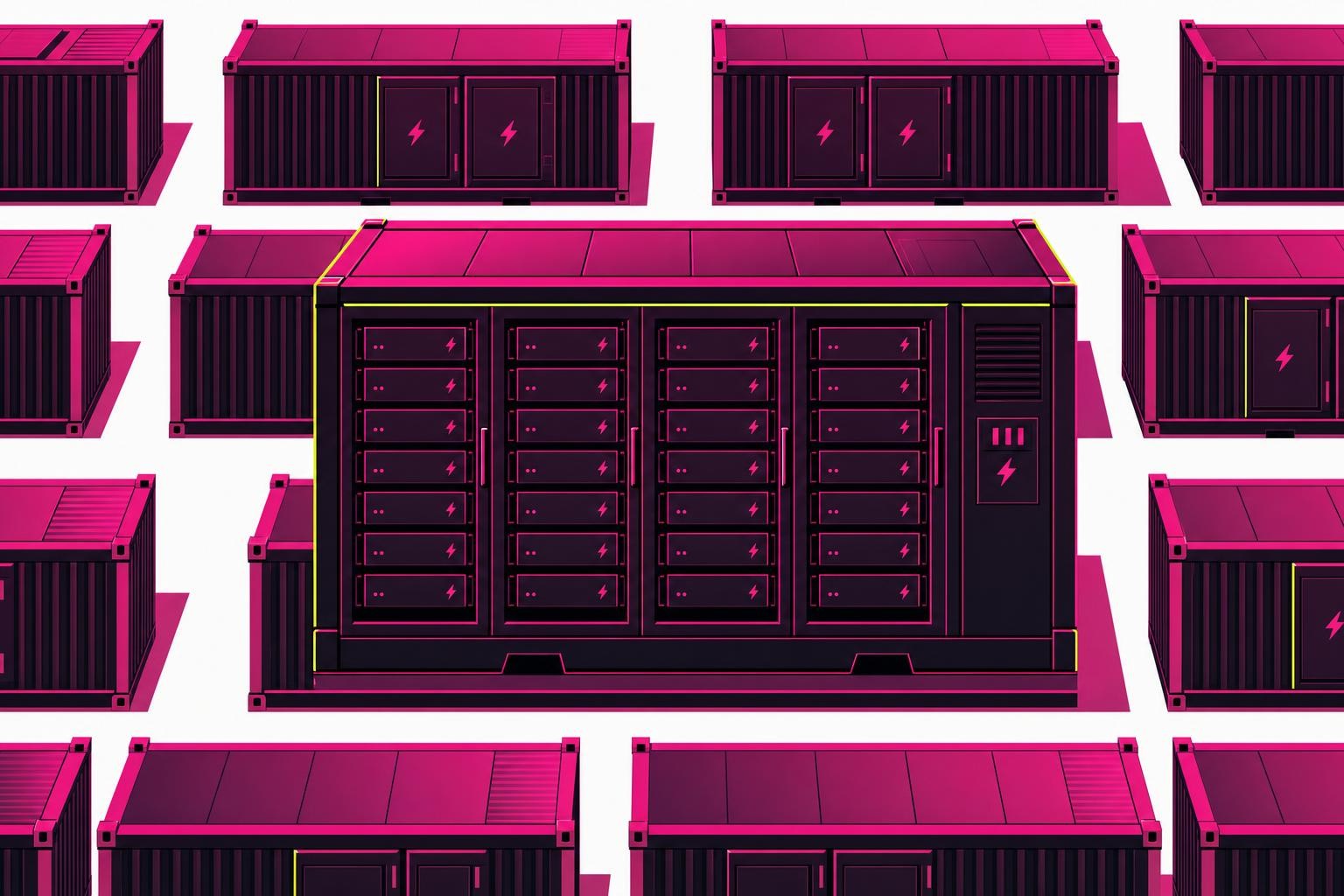
U.S. utility-scale battery storage crossed nearly 52 GW of nameplate capacity by mid-2026, the Energy Information Administration reported on 7 August, after operators added 8.3 GW in the first six months of the year - the fastest first-half pace on record and the clearest sign yet that storage is becoming a primary grid asset rather than a niche one. The three-year average annual growth rate stands at 70%. Operators report plans to add a further 54 GW through end-2028, including 14 GW in the second half of this year alone.
The DOE's Office of Energy Dominance Financing closed a $489.4 million loan to Amanecer Puerto Rico LLC, a Pattern Energy subsidiary, on 5 August 2026, to fund 220 MW of battery storage and lay groundwork for future dispatchable gas generation on the island. The agency projects the investment will save Puerto Rican families and businesses approximately $312.5 million in electricity costs over 25 years and avoid roughly 13 million customer interruption hours. The loan complements the Section 202(c) emergency orders DOE renewed on 10 August, which authorise PREPA to dispatch critical generation units through 7 November 2026.
Latin America's solar build accelerated sharply in 2025, with renewables comprising roughly 80% of newly installed power generation capacity across the region, according to an InfoLink analysis published by pv magazine on 10 August[1]. Brazil, Chile, Argentina and Colombia account for the bulk of installed PV capacity. The region is now entering a phase that requires commensurate investment in storage and grid infrastructure: energy storage deployment remains concentrated in demonstration projects, small-scale grid-support applications and remote-area microgrids, with a large-scale market yet to take shape[1]. Transmission and distribution constraints are the binding constraint in several markets, most acutely in Chile's Atacama Desert, where solar potential is high but grid infrastructure limits delivery to population centres.
Brazil is moving to address the storage gap directly. The Ministry of Mines and Energy has opened public consultation for a 2026 battery storage auction to contract systems of at least 30 MW capable of delivering four hours of power daily under 10-year agreements. The outcome of that process will be a leading indicator of whether Latin America's storage market can move beyond demonstration scale before curtailment costs become a structural drag on the region's solar economics.
The images and texts on this page were created with the help of AI.
Related
Ready-to-build BESS projects lose their premium as Australia's NEM arbitrage spreads collapse 85%
Panellists at the Battery Asset Management Summit Australia 2026 said the venture-capital-style returns that once rewarded ready-to-build BESS projects have disappeared as NEM price spreads fell 85% in a year.
10 Sept 2026UK government opens three-month consultation on AI for clean energy, backed by 34-recommendation network review
DESNZ published its Vision for an AI-enabled clean energy system on 8 September, opening a call for evidence that closes 6 November and will feed into the UK's first AI for Clean Energy Strategy.
10 Sept 2026Heatwaves expose a three-layer risk for wind operators: resource, hardware, and people
Extreme heat cuts wind output, stresses nacelle components, and grounds maintenance crews - all at once. A look at how bad the summer of 2026 has been, and what the trend means for grid reliability.
10 Sept 2026