Bureau of Reclamation proposes mandatory Colorado River cuts for Arizona, California and Nevada through 2036
The U.S. Bureau of Reclamation released its Final EIS on 31 July 2026, proposing up to 3 million acre-feet in annual cuts for the three Lower Basin states - with hydropower at Glen Canyon and Hoover dams directly in the frame.
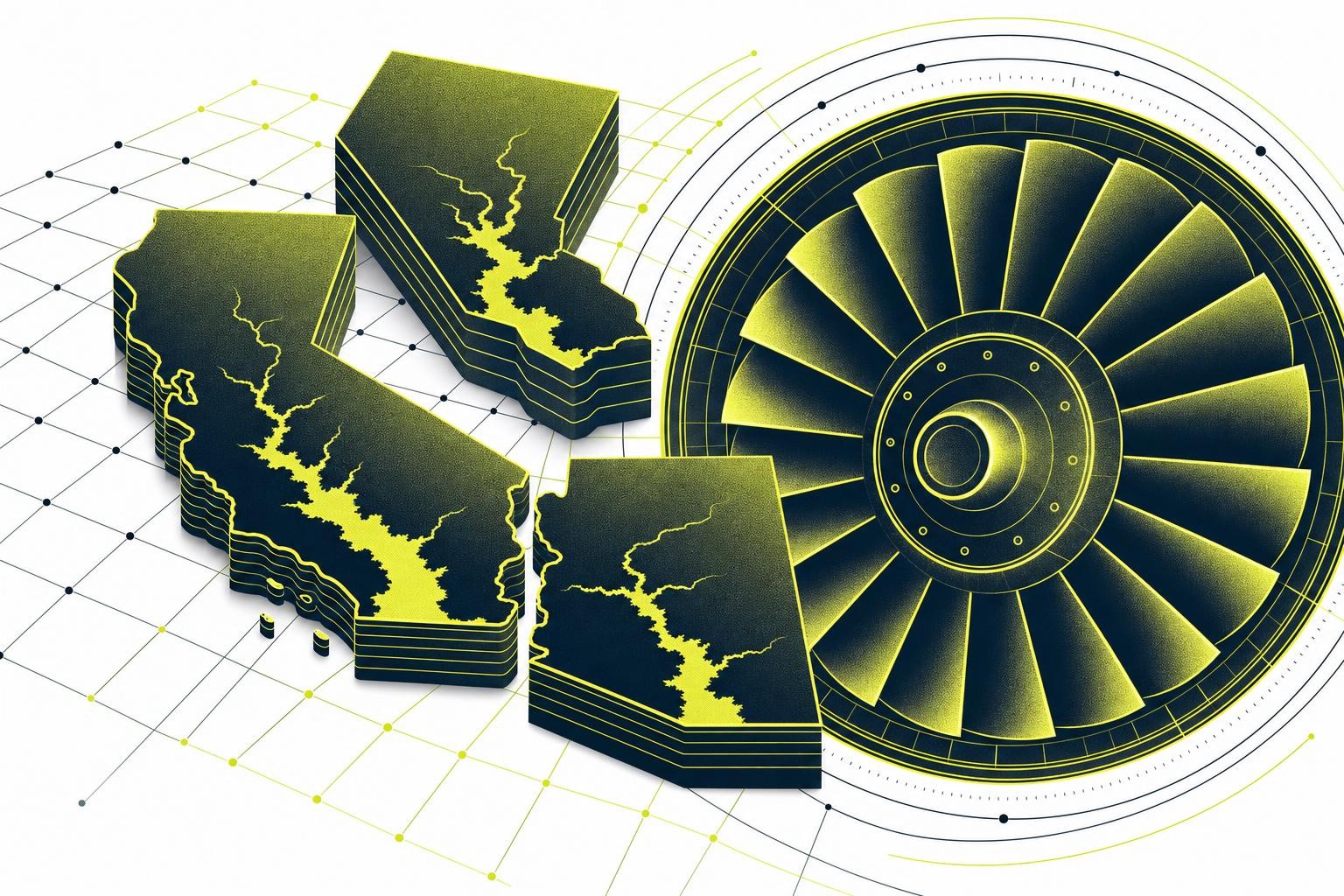
The U.S. Bureau of Reclamation released its Final Environmental Impact Statement for post-2026 Colorado River operations on 31 July 2026, identifying a preferred framework that would require Arizona, California and Nevada to collectively reduce their annual water withdrawals by up to 3 million acre-feet - roughly the combined annual entitlement of Arizona and Nevada, and enough to supply more than 25 million people per year[1]. Binding operating guidelines are expected by 1 October 2026, when the existing interim rules expire.
What the proposal does
The Final EIS establishes a framework for updating operating guidelines in anticipated two-year increments through 2036, replacing interim guidelines that have governed the river since 2007. The framework is deliberately flexible: cuts deepen in drier years and ease when reservoirs recover, while leaving room for the seven basin states to negotiate a consensus agreement that could supersede the federal rules. The four Upper Basin states - Colorado, Utah, Wyoming and New Mexico - are spared mandatory reductions for now.
The proposal is a direct response to a breakdown in interstate negotiations. Existing guidelines governing the river expire at the end of 2026, and years of deadlocked talks among the states - accompanied by threats of litigation - forced federal intervention. Interior Secretary Doug Burgum had warned publicly that any federal solution would leave nobody satisfied.
The hydropower dimension
For the power sector, the stakes extend well beyond water allocation. Glen Canyon Dam cannot generate hydropower below a reservoir elevation of 3,490 feet, and the Bureau of Reclamation has warned that its river outlet works were not designed for sustained operation at that level. As of 21 July 2026, Lake Powell was 21.8% full and Lake Mead was 25.1% full - together holding roughly 23.5% of their combined 65.7 km³ capacity.
The cascade risk runs downstream. Reduced releases from Lake Powell accelerate the decline of Lake Mead, and the Bureau has acknowledged the potential for up to an additional 40% reduction in Hoover Dam's hydropower generating capacity as a consequence of lower Powell releases already enacted this spring. The Colorado River system currently generates power for approximately 6 million people across seven states.
There is a structural paradox embedded in the new framework: conservation cuts that keep water in the reservoirs also reduce the hydraulic head available for generation. As one University of Colorado Boulder researcher noted, reducing Lower Basin consumption "can keep the water level high by reducing releases, that also will reduce [hydroelectric] generation."
Why negotiations collapsed
Since 2000, water use from the Colorado River has exceeded total inflow in most years, eroding the buffer that once made the system appear sustainable. The river's flows have dropped by roughly 20% over the past 27 years compared with the 20th-century average, and since 2020 average annual flow has been approximately 10.2 million acre-feet - a 33% decline from the long-run mean. A record-low snowpack this past winter left the two reservoirs at their lowest combined level since 1957.
The 1922 Colorado River Compact allocated more water than the river reliably carries, a miscalculation that decades of above-average snowpack concealed. With that buffer gone, the seven basin states have been unable to agree on how to redistribute a shrinking resource. The federal government's preferred alternative is explicitly framed as a near-term bridge - not a resolution of the underlying legal disputes - intended to provide "near-term certainty and predictability" while preserving flexibility if consensus eventually emerges.
What to watch
The Bureau is expected to issue final binding operating guidelines before 1 October 2026. Litigation from one or more states remains a credible risk; a successful legal challenge could extend uncertainty for a river system that already supplies one in ten Americans and irrigates land producing roughly 15% of U.S. food output. For grid operators in the Southwest, the more immediate signal is Lake Powell's elevation heading into autumn: if it approaches 3,490 feet before winter snowpack arrives, Glen Canyon Dam's generation profile changes materially - and Hoover Dam's capacity follows.
The images and texts on this page were created with the help of AI.
Related
Ready-to-build BESS projects lose their premium as Australia's NEM arbitrage spreads collapse 85%
Panellists at the Battery Asset Management Summit Australia 2026 said the venture-capital-style returns that once rewarded ready-to-build BESS projects have disappeared as NEM price spreads fell 85% in a year.
10 Sept 2026UK government opens three-month consultation on AI for clean energy, backed by 34-recommendation network review
DESNZ published its Vision for an AI-enabled clean energy system on 8 September, opening a call for evidence that closes 6 November and will feed into the UK's first AI for Clean Energy Strategy.
10 Sept 2026Heatwaves expose a three-layer risk for wind operators: resource, hardware, and people
Extreme heat cuts wind output, stresses nacelle components, and grounds maintenance crews - all at once. A look at how bad the summer of 2026 has been, and what the trend means for grid reliability.
10 Sept 2026