Copenhagen Infrastructure Partners closes Growth Markets Fund II at $3 billion, tripling its 2019 predecessor
CIP's GMF II reached final close at ~$3 billion on 14 August 2026, nearly tripling its predecessor, with $1.6 billion already committed across nine investments in 15 high-growth markets.
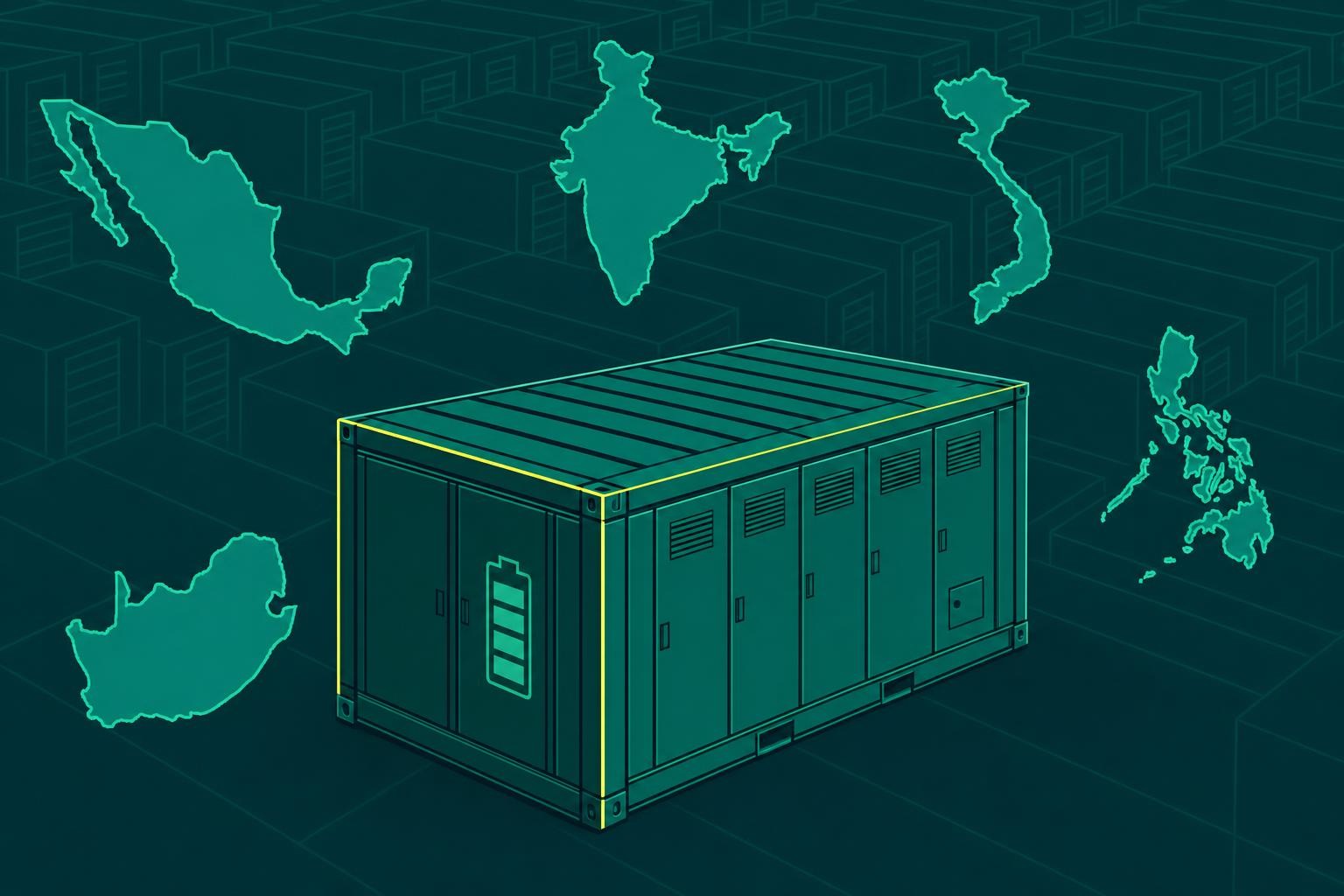
Copenhagen Infrastructure Partners (CIP) finalised fundraising for its Growth Markets Fund II (GMF II) on 14 August 2026, reaching approximately $3 billion in commitments - nearly triple the $1 billion raised for its 2019 predecessor[1].
What the fund does and where it invests
GMF II targets large-scale greenfield energy infrastructure projects across 15 high-growth, middle-income markets in Eastern Europe, Asia, and Latin America. CIP has named five of those markets explicitly: India, Vietnam, the Philippines, Mexico, and South Africa. The strategy spans offshore and onshore wind, solar PV, battery storage, and power-to-X.
The fund is not a blind pool. At launch in late 2023, CIP already held development-stage projects representing more than $5 billion in potential equity commitments - well above the $3 billion target - giving LPs visibility on deployment pace from the outset.
What has already been deployed
GMF II has committed $1.6 billion across nine investments at final close[1], and CIP says total value already exceeds paid-in capital. Portfolio highlights include:
- Commissioning of what CIP describes as Chile's largest standalone battery project, completed below budget.
- Commencement of construction on Mexico's first large-scale solar-plus-storage projects, including the 420 MWdc / 750 MWh La Esperanza project in Campeche state, which reached financial close on 6 August 2026.
The predecessor fund, GMF I, provides the performance context. GMF I, which closed at $1 billion in November 2019, is now expected to deliver approximately 8.7 GW of energy capacity across more than 50 projects in India and South Africa.
Who backed the fund
CIP attracted a broad LP base for GMF II, including sovereign wealth funds, pension funds, development finance institutions (DFIs), and impact-focused family offices, alongside re-ups from existing investors. The firm says it expanded its outreach across Asia, the Middle East, and North America for this vintage.
That LP composition matters for the markets CIP is targeting. DFIs and impact-focused capital can absorb the regulatory and execution risk that deters purely commercial investors from greenfield development in middle-income economies - a structural advantage when competing for project rights in markets like Vietnam or the Philippines.
Scale and what comes next
CIP manages 15 funds and has raised approximately EUR 43 billion in total since its founding in 2012, with more than 200 institutional investors and a staff of over 2,300 across its global network. GMF II is positioned as the world's largest fund dedicated to greenfield renewables in high-growth, middle-income countries.
CIP has indicated GMF II is expected to deliver around 10 GW of renewable energy capacity, reflecting roughly $10 billion of total capital infrastructure investment. With $1.6 billion committed and $1.4 billion still to deploy, the pace of new project announcements across the 15 target markets is the figure to track from here.
The images and texts on this page were created with the help of AI.
Related
Ready-to-build BESS projects lose their premium as Australia's NEM arbitrage spreads collapse 85%
Panellists at the Battery Asset Management Summit Australia 2026 said the venture-capital-style returns that once rewarded ready-to-build BESS projects have disappeared as NEM price spreads fell 85% in a year.
10 Sept 2026UK government opens three-month consultation on AI for clean energy, backed by 34-recommendation network review
DESNZ published its Vision for an AI-enabled clean energy system on 8 September, opening a call for evidence that closes 6 November and will feed into the UK's first AI for Clean Energy Strategy.
10 Sept 2026Heatwaves expose a three-layer risk for wind operators: resource, hardware, and people
Extreme heat cuts wind output, stresses nacelle components, and grounds maintenance crews - all at once. A look at how bad the summer of 2026 has been, and what the trend means for grid reliability.
10 Sept 2026