Capital Dynamics acquires 170 MW / 680 MWh BESS in County Kerry, its first deal in the Republic of Ireland
Capital Dynamics has bought a ready-to-build 170 MW / 680 MWh four-hour BESS at Knockanure, County Kerry - its first investment in the Republic of Ireland and one of the first projects EirGrid will classify as LDES.
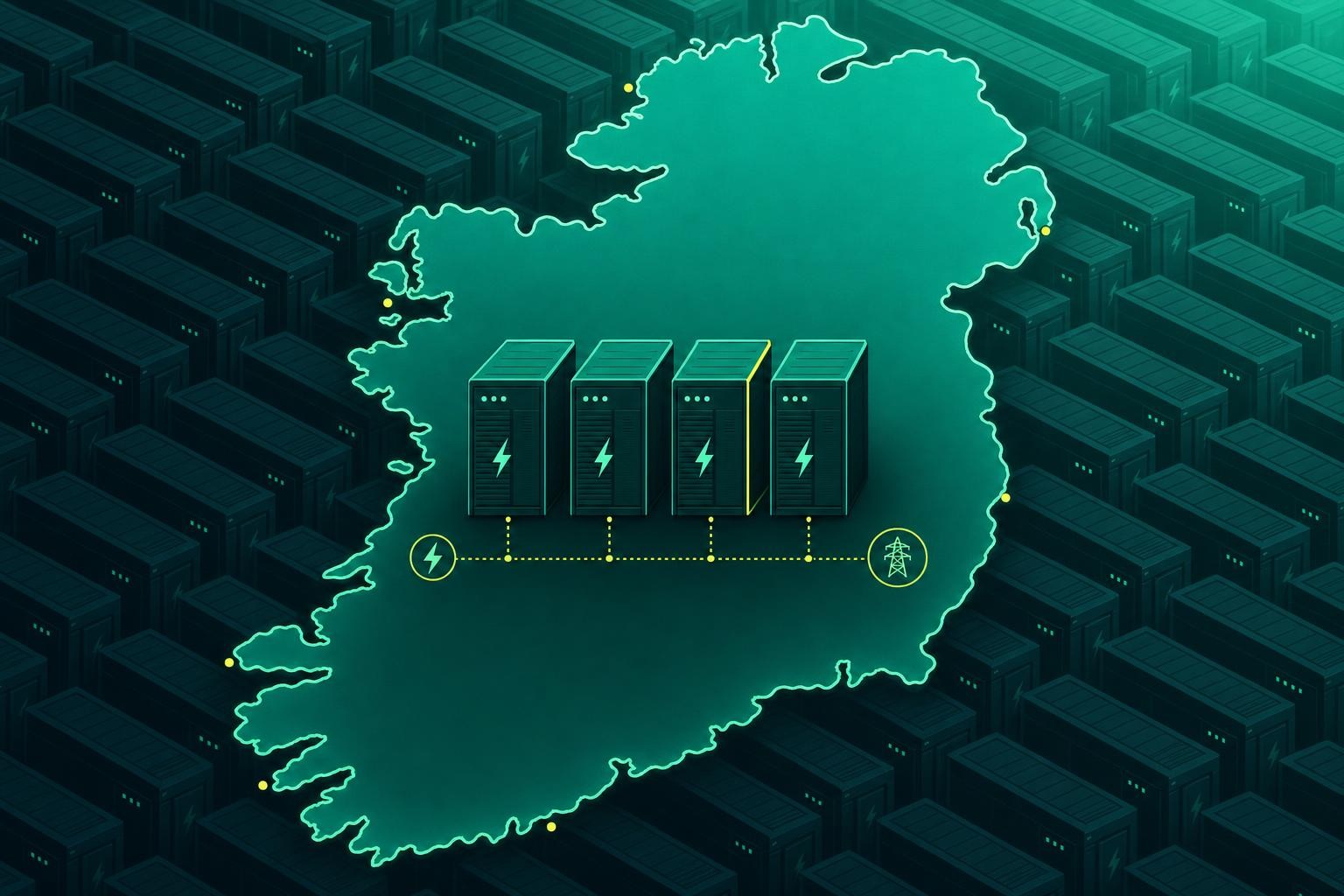
Capital Dynamics has acquired a ready-to-build 170 MW battery energy storage system at Knockanure, County Kerry, the asset manager's first transaction in the Republic of Ireland[1]. The project carries a four-hour duration, giving it a total energy capacity of 680 MWh, and has already secured a grid connection at the neighbouring 110 kV Knockanure substation[1].
The project was bought from a group of private shareholders, with Capital Dynamics advised by Pinsent Masons on legal matters, Afry on technical due diligence, and Mazars on financial advisory.
What the project is
The ready-to-build system will be among the first BESS projects delivered in Ireland as a long-duration energy storage solution, as classified by transmission system operator EirGrid. Planning consent was secured in October 2025, and work has started on procurement and delivery planning.
EirGrid's LDES classification matters commercially. EirGrid's proposed procurement model would apply a revenue-sharing approach to revenues above a floor, in a ratio of 70% for the LDES asset owner and 30% for the TSO. The Commission for Regulation of Utilities is due to issue its procurement mechanism decision, with winning projects expected to execute contracts by end-2027.
Why Ireland needs four-hour storage now
Ireland and Northern Ireland share the Single Electricity Market, one of Europe's most wind-dependent grids. The Irish government targets 80% renewables by 2030, requiring 9 GW of onshore wind, 5 GW of offshore wind, and 8 GW of solar on an all-island system that currently peaks at around 6 GW.
That ambition is already straining the grid. Ireland's system balancing costs reached €567 million in 2024/25 and are forecast to hit €700 million in 2025/26, driven by the need to curtail wind and keep gas plants running for stability whenever non-synchronous generation approaches the system limit. EirGrid and SONI track penetration through System Non-Synchronous Penetration - the share of generation from wind, solar, and interconnector imports - which is currently capped at 75% across the all-island system. When the system approaches that ceiling, the operator curtails wind and forces gas plants to keep running.
EirGrid is raising the ceiling: the SNSP limit has climbed from 50% in 2015 to 75% today, with a target of 95% by 2030. Getting there requires more storage. Ireland currently has around 800 MW of operational battery storage - mostly 0.5 to 2-hour duration - against a planning pipeline exceeding 10 GW and a government target of 500 MW of long-duration storage by 2030.
The gap between ambition and delivery is stark. Ireland has just 1.2 GW of battery energy storage live from a pipeline exceeding 10 GW. Grid congestion and connection delays remain the single biggest barrier, even as the Irish government has committed €3.5 billion in grid investment between 2026 and 2030.
Capital Dynamics' position in the Irish Single Electricity Market
The Kerry acquisition is Capital Dynamics' second LDES move on the island of Ireland in 2026. In March, the firm agreed a £100 million joint venture with Solo Renewables for the 150 MW Islandmagee project in Northern Ireland, which will provide up to eight hours of storage equivalent to 1,200 MWh and is among the first large-scale LDES sites in the Irish Single Electricity Market. The Islandmagee project received planning approval from Mid and East Antrim Borough Council in February 2026, just six months after submission.
The two projects give Capital Dynamics a combined pipeline of:
- 170 MW / 680 MWh at Knockanure, County Kerry (Republic of Ireland) - four-hour duration, ready to build
- 150 MW / 1,200 MWh at Islandmagee, County Antrim (Northern Ireland) - up to eight-hour duration, planning approved
Together they represent 320 MW and 1,880 MWh of LDES capacity across both jurisdictions of the Irish Single Electricity Market.
What to watch
The Kerry project's next milestone is financial close and contractor selection - neither of which has been announced. The broader signal to watch is whether EirGrid's LDES procurement mechanism, expected to conclude contracting by end-2027, provides the revenue floor that makes projects of this scale bankable without subsidy. EirGrid set the proposed minimum procurement for LDES at 201 MW, well below the government's 500 MW target, and Energy Storage Ireland has called for greater ambition and longer contract lengths to reflect international standards. How that gap closes will determine whether the Kerry project competes in a well-supported market or a thin one.
The images and texts on this page were created with the help of AI.
Related
Ready-to-build BESS projects lose their premium as Australia's NEM arbitrage spreads collapse 85%
Panellists at the Battery Asset Management Summit Australia 2026 said the venture-capital-style returns that once rewarded ready-to-build BESS projects have disappeared as NEM price spreads fell 85% in a year.
10 Sept 2026UK government opens three-month consultation on AI for clean energy, backed by 34-recommendation network review
DESNZ published its Vision for an AI-enabled clean energy system on 8 September, opening a call for evidence that closes 6 November and will feed into the UK's first AI for Clean Energy Strategy.
10 Sept 2026Heatwaves expose a three-layer risk for wind operators: resource, hardware, and people
Extreme heat cuts wind output, stresses nacelle components, and grounds maintenance crews - all at once. A look at how bad the summer of 2026 has been, and what the trend means for grid reliability.
10 Sept 2026