Boston Green Ribbon Commission kicks off year-long BosTEN feasibility study for harbor and river heat pumps, with recommendations due mid-2027
Boston's Green Ribbon Commission launched the BosTEN project in late July 2026, backed by $500,000 in state and city funding, to assess whether thermal energy from Boston Harbor and local rivers can heat and cool major institutions at scale.
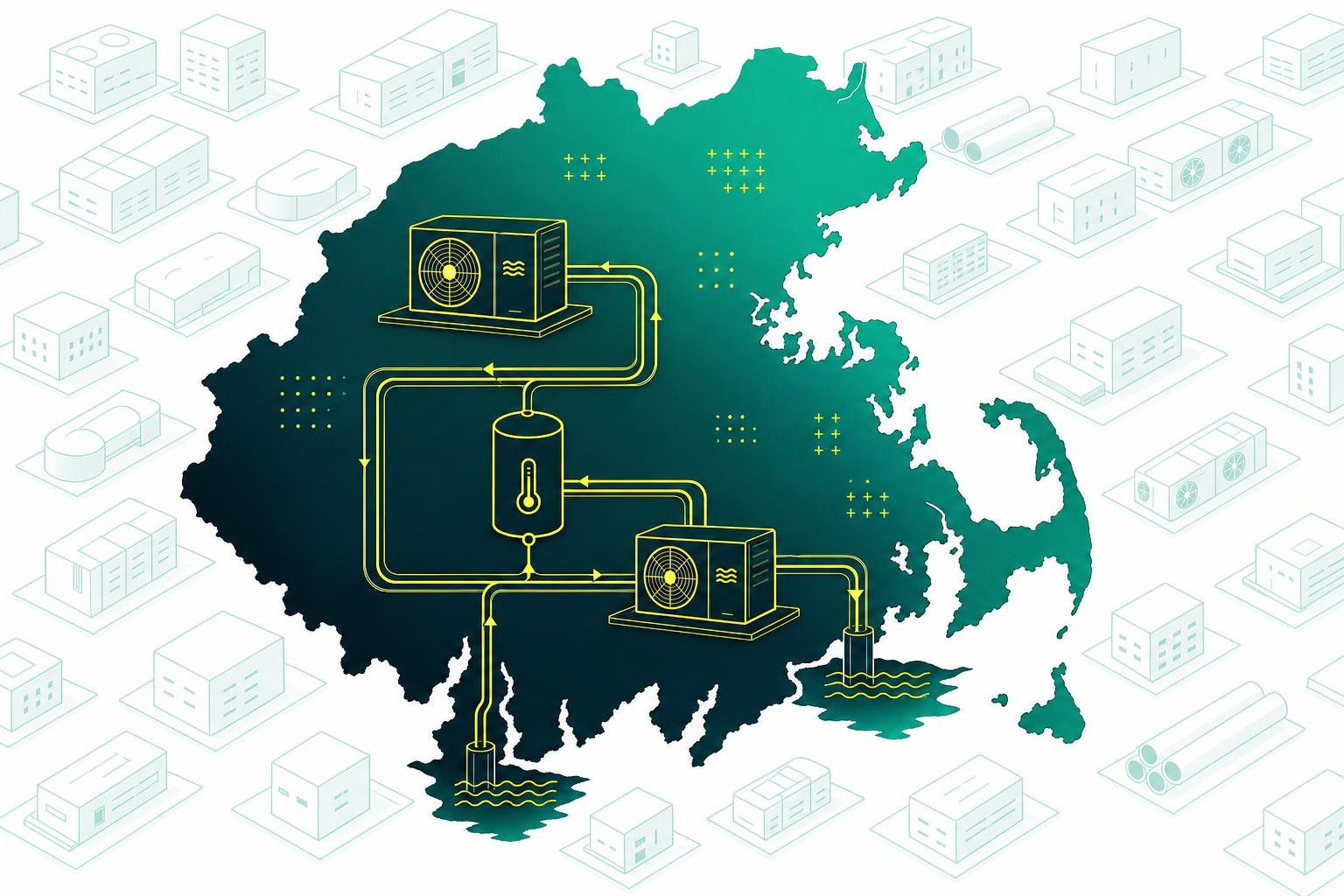
The Boston Green Ribbon Commission held a kickoff event in late July 2026 at UMass Boston, formally launching the Boston Area Thermal Energy Network project - BosTEN - a year-long study into whether the city's harbor and rivers can supply large-scale, low-carbon heating and cooling to its biggest institutions[1]. The study is backed by $500,000 in joint funding from the Massachusetts Clean Energy Center (MassCEC) and the City of Boston, with MassCEC contributing $450,000 and the city $50,000[1].
What the study covers
The commission has hired a technical team to investigate how much thermal energy can reliably be extracted, how it can best be transported, where the most likely customers are, and what permitting and regulatory issues might arise[1]. The targeted thermal reservoirs are:
- Boston Harbor
- The Charles River
- The Mystic River
- The Fort Point Channel
- Bedrock beneath the Charles and Mystic rivers[1]
The system would operate as a closed loop, circulating heat through sealed infrastructure without drawing water from the waterways - a design intended to avoid impacts on marine life[1]. Anchor institutions such as hospitals, universities, large businesses, and government agencies are expected to provide current and projected thermal demand data and identify barriers to connecting their existing building systems to a district network[1].
The commission intends to have final recommendations available in spring or summer of 2027[1].
The thermal resource case
HEET, a Boston-based nonprofit that has been advocating for thermal networks as an alternative to fossil fuel heating, has done preliminary calculations on the harbor's potential. Rising water temperatures in Boston Harbor since 1920 mean the harbor holds enough thermal energy to heat an estimated 2.4 million households annually, according to HEET researchers[1]. Ocean currents replenish the harbor's heat every two to ten days, making sustained extraction feasible[1].
The BosTEN study's goal is to demonstrate that thermal energy networks can reduce pollution, mitigate peaks on both gas and electric systems, and deliver long-term cost savings[1]. MassCEC CEO Ben Downing said the project would "deepen our understanding of how these systems can strengthen our grid, manage peak demand, and make Massachusetts more energy independent."
Vicinity Energy's parallel build
While BosTEN is still in the study phase, Vicinity Energy - the largest district energy provider in the United States - is already under construction on a related project. Vicinity broke ground on a 35 MW river-based industrial heat pump at its Kendall Square facility in Cambridge in late 2025, using thermal energy from the Charles River to produce carbon-free steam for delivery across its 29-mile district energy network. The project, developed with Everllence and DCO Energy, is scheduled for completion in 2028.
Once operational, the 35 MW installation will be the largest river-source heat pump in North America and will be capable of serving more than 70 million square feet of building space. Vicinity's 42 MW electric boiler at the same site went online in November 2024, and thermal storage is planned for 2031 to complete the full system.
The Vicinity project uses an ammonia-based heat pump that draws roughly 70,000 gallons of river water per hour through existing intake infrastructure, then returns it to the Charles at a slightly lower temperature.
European precedents
The shift toward water-source thermal energy in Boston follows a pattern already established in northern Europe. GRC members visited a 30 MW CO₂-based seawater heat pump system in Esbjerg, Denmark, operated by DIN Forsyning, in 2025. Vicinity's chief sustainability officer has also pointed to Glasgow, Scotland - where a district heating network draws thermal energy from the River Clyde - and Malmö, Sweden, which uses heat from sewage treatment plant discharge[1].
Thermal energy networks of this type are already in operation across Canada and Europe, and the BosTEN study is explicitly designed to assess whether the model can be replicated in a dense American city.
The key regulatory and permitting questions - including what approvals are needed to exchange thermal energy with Boston Harbor and the city's rivers - remain open. Those answers, along with the technical and economic findings, are what the commission's hired team will spend the next year working through before any construction decision can be made.
The images and texts on this page were created with the help of AI.
Related
Ready-to-build BESS projects lose their premium as Australia's NEM arbitrage spreads collapse 85%
Panellists at the Battery Asset Management Summit Australia 2026 said the venture-capital-style returns that once rewarded ready-to-build BESS projects have disappeared as NEM price spreads fell 85% in a year.
10 Sept 2026UK government opens three-month consultation on AI for clean energy, backed by 34-recommendation network review
DESNZ published its Vision for an AI-enabled clean energy system on 8 September, opening a call for evidence that closes 6 November and will feed into the UK's first AI for Clean Energy Strategy.
10 Sept 2026Heatwaves expose a three-layer risk for wind operators: resource, hardware, and people
Extreme heat cuts wind output, stresses nacelle components, and grounds maintenance crews - all at once. A look at how bad the summer of 2026 has been, and what the trend means for grid reliability.
10 Sept 2026