Base Power closes a second $1 billion round and launches its largest home battery yet
Base Power's Series D values the Austin startup at $13 billion and funds production of Base Core, a 39.2 kWh residential battery designed to double as a dispatchable grid resource.
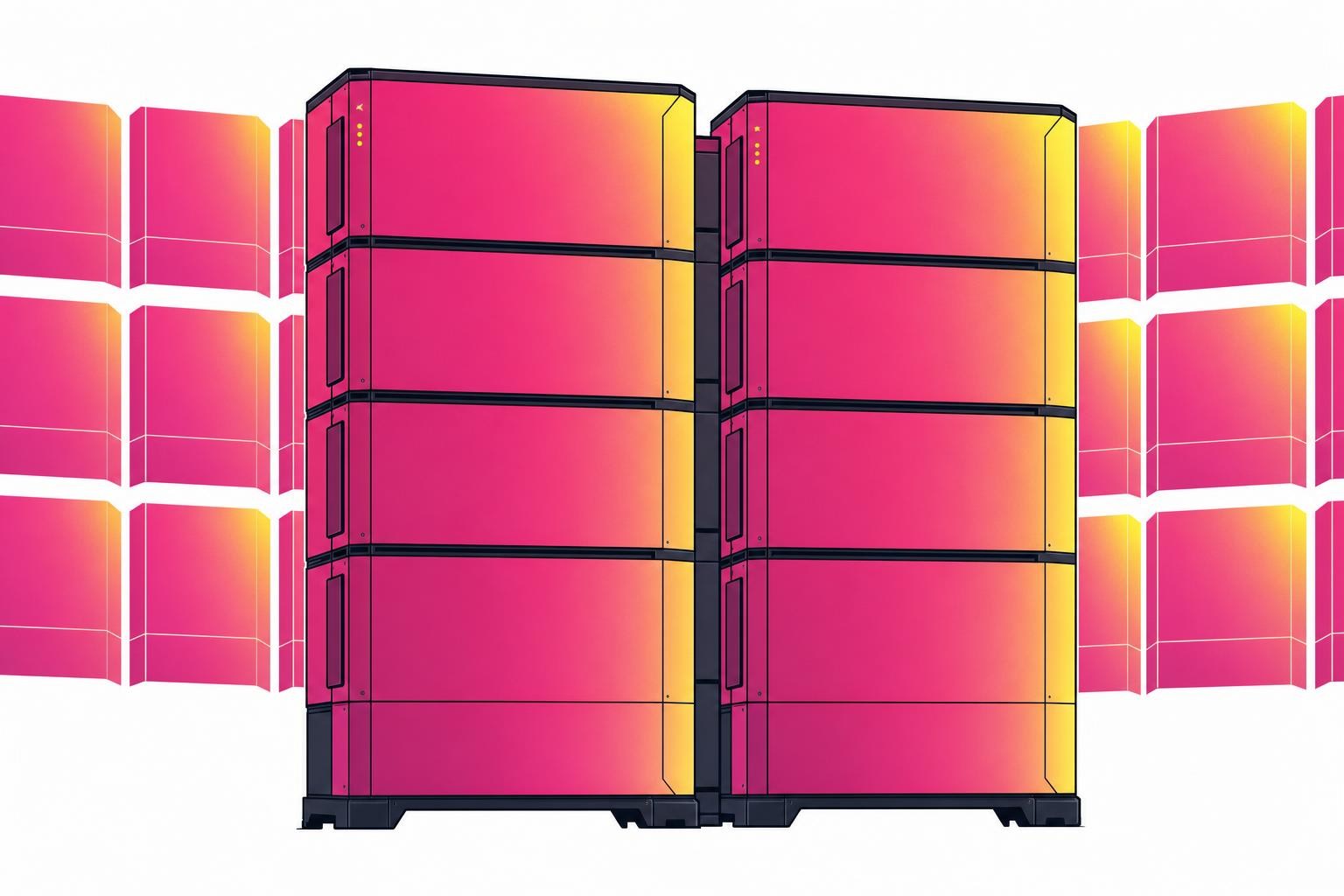
Base Power, the Austin-based residential battery company, closed a $1 billion Series D on 3 August 2026, lifting its post-money valuation from $4 billion to $13 billion[1]. The round was led by Ribbit, Addition, Valor Equity Partners, and JPMorganChase's Strategic Investment Group, and brings the company's total capital raised to more than $2.5 billion[1].
A bigger battery, built domestically
Alongside the financing, Base launched Base Core - a 39.2 kWh residential battery system, with a dual-unit configuration reaching 78.4 kWh, making it one of the largest home storage products on the market. Core comes in 39.2 kWh and 78.4 kWh versions and is designed to switch to backup power automatically and operate through extreme weather. Production is underway at Base Factory 1 in Austin, where the system is designed to function as both a residential backup power source and a distributed grid resource. Base is currently installing roughly 100 batteries per day - equivalent to approximately 8 MWh of storage per day - and has said it aims to double that rate by the end of the year.
Fleet scale and utility contracts
The new capital follows a year of rapid deployment. Base's installed fleet grew from more than 100 MWh in October 2025 to more than 500 MWh, and the company has expanded its service area from Texas into Illinois. On the utility side, partnerships with El Paso Electric, Austin Energy, and CoServ now collectively represent more than 200 MW of contracted capacity.
The commercial structure is deliberately two-sided. Base can either toll its owned batteries to a utility partner on a pay-for-performance basis, or transfer ownership of the fleet once deployed under a build-transfer model. In ERCOT, batteries installed through utility partnerships are enrolled in the grid operator's Aggregated Distributed Energy Resource pilot, which allows distributed batteries to earn revenue through direct participation in ERCOT's wholesale energy and ancillary services markets.
The grid case for residential scale
The broader argument Base is making to utilities is speed. Base positions its residential fleet as demand-side megawatts that utilities can dispatch - battery capacity deployed in months, not years. Residential systems connect behind the meter at the customer's existing service point, which eliminates the need for new interconnection agreements or substation upgrades in most cases. That framing matters in markets like PJM, where the interconnection queue backlog and long lead times for conventional generation have become acute planning constraints.
The U.S. projected peak demand could reach 900 GW by 2030, with virtual power plants potentially serving up to 20% of peak load. Against that backdrop, analysis cited by the Department of Energy suggests that a VPP drawing on behind-the-meter batteries could provide peaking capacity at roughly half the net cost to a utility of alternatives such as a utility-scale battery or a natural gas peaker plant.
What to watch
The immediate test is whether Base can sustain its production ramp at Base Factory 1 while simultaneously entering new markets. The company has not disclosed which states follow Illinois, but the PJM footprint - where capacity prices cleared at the $329.17/MW-day price cap in the 2026/27 base residual auction - represents an obvious commercial target. Utility dispatch rights, revenue-sharing terms with homeowners, and FERC's evolving rules on DER market access will determine how much of the contracted 200 MW actually clears into wholesale markets.
The images and texts on this page were created with the help of AI.
Related
Ready-to-build BESS projects lose their premium as Australia's NEM arbitrage spreads collapse 85%
Panellists at the Battery Asset Management Summit Australia 2026 said the venture-capital-style returns that once rewarded ready-to-build BESS projects have disappeared as NEM price spreads fell 85% in a year.
10 Sept 2026UK government opens three-month consultation on AI for clean energy, backed by 34-recommendation network review
DESNZ published its Vision for an AI-enabled clean energy system on 8 September, opening a call for evidence that closes 6 November and will feed into the UK's first AI for Clean Energy Strategy.
10 Sept 2026Heatwaves expose a three-layer risk for wind operators: resource, hardware, and people
Extreme heat cuts wind output, stresses nacelle components, and grounds maintenance crews - all at once. A look at how bad the summer of 2026 has been, and what the trend means for grid reliability.
10 Sept 2026